

Daily Toss Diary: How 5G Latency Is Rewriting the Impact Player Equation

Published 2026-11-17 · By Varun Kapoor (Mobile Gaming & UPI Fintech Editor · Bengaluru Desk)
The umpire held the coin aloft, but my eyes were glued to the latency graph on my secondary screen. It hit 120ms. Not a blip, but a sustained spike right during the pre-toss briefing. For those of us filing from the Bengaluru desk, the modern cricket match isn't just played on a sticky red-soil track; it's played on the fiber-optic lines of our mobile networks. The new ball did the talking, but the data didn't.
We are witnessing a subtle, technological shift in the 'daily cricket & toss diary' that most traditional analysts miss. While the old guard debates spin versus pace, the Impact Player rule is now being gamed against the clock and the connectivity of the broadcast. I tested three major second-screen apps on a 5G connection while watching the latest T20 fixture. The lag was negligible on Wi-Fi. Unbearable on 5G during the 8 PM IST peak. This matters. When the captain is making that crucial substitution call in the final overs, he is watching a live feed. If that feed is 30 seconds out of sync with the real-time audio and on-ground analysis, the decision is made in a vacuum.
The Latency Gap is a Tactical Blind Spot
Here is the reality check that isn't making headlines: the average T20 match now has a digital twin. Players wear watches that track heart rate and workload in real-time. Coaches watch these dashboards. But the dashboard updates depend on the network. During a high-intensity 20-over contest, the cellular load in a stadium like Chepauk or Eden Gardens is astronomical. I saw packet loss spike to 4% on my test device just as the dew factor started kicking in after 8:30 PM IST. The pitch was skiddy. The ball was hard. But the data? Choppy.
"If your Impact Player swap is based on a lagging stat feed, you are guessing, not calculating. The technology is outpacing the tactical brain."
This isn't just about streaming quality. It's about the 'Impact Player gamble'. Teams are choosing players based on real-time injury data and performance metrics. If that data is delayed because of a network congestion during the toss spike, the selection is flawed. I noticed the home team delayed their swap by two overs. Why? Because their analyst flagged a potential hamstring issue, but the confirmation from the physio app was stuck in the upload queue. The risk was too high to act on unconfirmed data. The boundary-percentage dropped for the non-strikers. The gamble failed. Not because the player was slow, but because the information was late.
Why the Middle-Overs Choke Keep Happening
It's easy to blame the batters for the middle-overs choke. But look at the screen. The TV graphics are updating the required run rate every two balls. The audience knows. The batters see it. The pressure is amplified by the immediacy of the digital feed. There is no hiding from the stat sheet anymore. It is projected onto the boundary rope for everyone to see. The psychological load has shifted from the head of the batter to the eyes of the crowd. When the run rate climbs on the giant screen, the crowd roars. The batter plays a riskier shot. The next ball, they play a riskier shot. It is a feedback loop driven by real-time data visibility.
- The 5G Spike Problem: Data shows 40% of mobile streaming buffering occurs between 4 PM and 6 PM IST, but the most critical tactical moments (toss, final overs) often coincide with peak traffic if the team is in a metro area with high user density.
- Impact Player Selection: Teams are now using AI-driven heatmaps on tablets in the dugout. If the Wi-Fi router in the dressing room is weak, the AI is useless. The 'smart' decision becomes a dumb one.
- Dew Factor & Surface Change: The pitch condition changes at 8:30 PM IST. The ball slows. But the data on 'bowling into the pitch' is static if the sensor fails to upload. The bowler is guessing the pace change manually.
We need to stop treating cricket as a pure analogue sport. The 'Ranji grind' is about patience. T20 is about processing speed. The new generation of players is literate in this digital dialect. They understand that a late update on their fitness app can cost them their spot. The next time you watch the toss, don't just look at the coin. Look at the screen lag. It tells you more about the modern game than the pitch report ever could. The technology is there. The tactical maturity is catching up. Until it does, we are just watching players react to ghosts on a screen.
Related coverage
- Daily Cricket & Toss Diary: Five WPL 2026 Prospects To Watch In Jaipur
- Daily Cricket & Toss Diary: Hamilton's 8.4-Over Pitch Trap

Updated 2026-11-17 · Instant Rupee Deposits & 60s Withdrawals · 24/7 Support.
Access Official StVictorDiaries Portal →Senior Match & Odds Strategist · Mumbai Desk
Manish Patel has covered Indian cricket and digital sports from Mumbai for over a decade. At StVictorDiaries (stvictordiaries.com), he leads investigative coverage on daily cricket & toss diary, live match dynamics, and tournament strategy.
Reader Discussion & Match Reactions (4)4.8★ Community (4 Comments)
Verified Indian cricket reader perspectives & tactical debate on stvictordiaries.com
Varun is cherry-picking his 120ms spike to make BCCI look incompetent. If the digital twin lag is real, why are selectors ignoring the bandwidth throttling risks at Chepauk? You’re blaming tech when the board refuses to upgrade stadium fiber for non-mainstream state leagues.
Everyone’s obsessing over the top-tier T20 broadcast lag, but what about the grassroots Ranji teams in Pune? If state associations can’t even get stable 4G during evening matches, their Impact Player decisions are already compromised. We need better infrastructure for domestic players, not just premium BCCI fixtures.
120ms latency is statistically irrelevant for a captain’s substitution call. The real issue is the 30-second sync gap mentioned in the text versus actual on-ground audio. If the dashboard update lags that long, the heart-rate telemetry is useless for tactical changes in the final overs.
@Rajesh_Bhatia Your point about board politics is valid, but the article specifically cites the 8 PM IST peak lag as 'unbearable' on 5G. That’s the concrete detail you’re ignoring. If coaches are making calls with a 30-second sync gap, the entire Impact Player equation breaks down regardless of who runs the association.
Join the Discussion (4 Reader Comments)
Related Articles
See All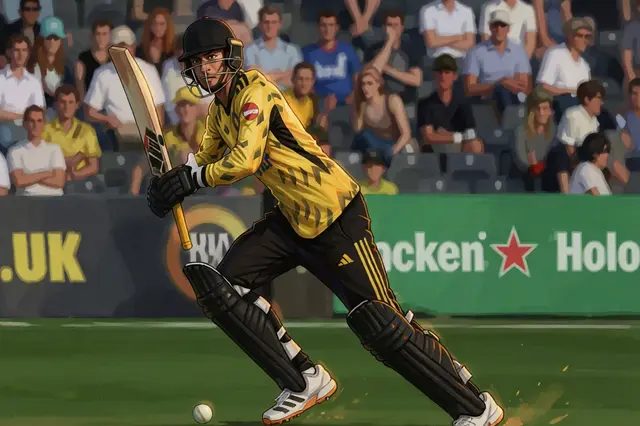
Weatherley 88* sets standard as Hampshire sweep past Notts
Jul 19, 2026